Bubbly: A Chic Brush Font for High-Impact Headlines and Stylish Branding
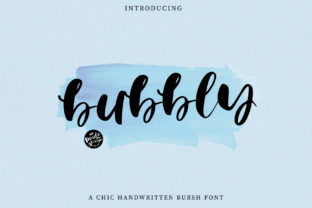
Bubbly is a contemporary brush script font designed with expressive, hand-drawn energy and refined elegance. Unlike mechanical scripts or tightly kerned sans-serifs, Bubbly features natural stroke variation, subtle texture, and confident letterforms that retain organic flow—even at large sizes. Its defining characteristic is balance: it feels spontaneous but intentional, playful yet polished. This makes it especially effective where visual impact matters most—headlines, logo lockups, event invitations, social media banners, and editorial feature titles.
What Sets Bubbly Apart from Other Brush Fonts
Not all brush fonts deliver the same impression. Some lean heavily into whimsy—think exaggerated loops, inconsistent weight, or uneven baseline alignment—which works beautifully for children’s products or casual crafts but can undermine credibility in professional contexts. Others prioritize uniformity over authenticity, resulting in overly smooth, digitized strokes that lack warmth.
Bubbly avoids both extremes. Its contrast between thick downstrokes and fine upstrokes is pronounced but controlled. Letters connect fluidly without forced ligatures, and spacing is carefully tuned to support readability at scale. It doesn’t rely on excessive swashes or alternate characters to feel distinctive—its personality emerges from consistent rhythm and confident structure. That restraint gives it versatility across industries: a boutique skincare brand might use Bubbly for its “New Collection” banner, while a design studio could deploy it in a portfolio headline without seeming out of place.
Where Bubbly Excels—and Where It Doesn’t
Bubbly shines in short-form, high-visibility applications. For example:
- A wedding invitation suite where the couple’s names appear in Bubbly at 72 pt, paired with a neutral serif for body text—creating contrast without competing.
- A blog post title about sustainable fashion, set in Bubbly over a minimalist hero image, drawing immediate attention before the reader scrolls.
- A limited-edition product label for artisanal candles, where the font reinforces craftsmanship and care without requiring illustration.
It performs less effectively in extended reading. Body copy, captions under 14 pt, or dense UI elements benefit from higher legibility and lower visual complexity—qualities Bubbly intentionally sacrifices for stylistic impact. Using it for paragraphs or navigation menus would strain readability and dilute its strength as a focal-point tool.
Also consider context: Bubbly conveys approachability and creativity, but not authority or technical precision. A fintech dashboard, legal firm website, or academic journal header would likely misalign with Bubbly’s tone. Its voice is warm, human-centered, and visually inviting—not clinical, rigid, or institutional.
Comparing Bubbly to Broader Font Categories
When evaluating type options, it helps to situate Bubbly within broader stylistic families—not just against other brush fonts, but against related categories like calligraphic scripts, modern scripts, and decorative display fonts.
Calligraphic scripts often emulate formal penmanship—think copperplate or Spencerian. They emphasize strict stroke discipline, sharp angles, and historical fidelity. Bubbly shares some rhythmic qualities but abandons strict formality for expressive freedom. It’s more adaptable to contemporary layouts and less demanding in terms of typographic pairing.
Modern scripts (like those with clean, monoline construction) tend toward minimalism and digital polish. They’re legible and sleek but can feel detached or generic. Bubbly offers more tactile presence and visual interest—valuable when differentiation matters, such as in crowded digital feeds or competitive branding spaces.
Decorative display fonts span a wide range—from retro neon signs to grunge textures—but many prioritize novelty over function. Bubbly avoids gimmickry. Its decoration comes from inherent stroke behavior, not added effects. That makes it more durable across mediums and time-sensitive projects.
Practical Pairing Considerations
Type pairing isn’t about arbitrary contrast—it’s about functional harmony. With Bubbly, successful pairings usually fall into one of two patterns:
- Neutral counterpoint: A clean, unadorned sans-serif (e.g., a geometric or humanist style) provides breathing room and grounds Bubbly’s energy. Think Inter, Lato, or Poppins at regular or light weights. This combination supports clarity while letting Bubbly anchor emotional resonance.
- Textured complement: A low-contrast serif or soft slab with gentle serifs and open apertures—like Playfair Display (Regular), Cormorant Garamond, or even a well-designed variable serif—can echo Bubbly’s warmth without mimicking its movement. The key is avoiding competing flourishes or competing contrast levels.
Avoid pairing Bubbly with other highly stylized fonts—especially additional scripts or distressed display faces. The result often feels cluttered rather than curated. Similarly, overly tight tracking or heavy letter-spacing can disrupt Bubbly’s natural rhythm; let its built-in spacing breathe unless intentional compression serves a specific design goal.
Realistic Use Cases and Decision Factors
Choosing Bubbly depends less on preference and more on alignment with communication goals. Ask yourself:
- Is the message meant to be noticed first—or understood deeply? If immediate visual engagement drives the objective (e.g., Instagram story headline, event poster, email subject line), Bubbly is strong. If comprehension speed or accessibility is primary (e.g., instructions, data labels, multilingual interfaces), another option may serve better.
- Does the brand voice lean toward warmth, individuality, or craft? Bubbly supports brands that value handmade nuance, personal connection, or aesthetic intentionality. It’s less suited to brands emphasizing efficiency, scale, or uniformity.
- Will the font appear across multiple formats? Bubbly renders well on screen and in print at headline sizes, but test it in your intended environments—especially if used in SVGs, embedded PDFs, or email clients with limited font support. Web use requires proper licensing and fallback strategies.
One practical test: try setting your core headline in Bubbly alongside three alternatives—a classic serif, a neutral sans, and a different script. Which version best reflects the feeling you want someone to have *before* they read a single word? That’s often the clearest signal of fit.
When to Look Beyond Bubbly
Bubbly isn’t a universal solution—and that’s by design. If your project requires:
- Multi-language support beyond basic Latin characters (e.g., extended diacritics, Cyrillic, or Greek), verify whether the Bubbly family includes those glyphs. Many brush fonts don’t.
- Variable font capabilities (e.g., adjustable weight or width axes), know that Bubbly is typically offered as static weights only—so dynamic responsiveness isn’t built in.
- Strict accessibility compliance for large-scale public-facing content, remember that highly decorative fonts require careful contrast, sizing, and semantic HTML implementation to meet WCAG guidelines.
None of these are flaws—they’re tradeoffs inherent to its category. Recognizing them early helps avoid mid-project adjustments or mismatched expectations.
Making an Informed Choice
Selecting a font like Bubbly is ultimately about matching expressive intent with functional requirements. It’s not about finding the “best” font overall, but the most appropriate one for a specific purpose, audience, and environment. Bubbly earns its place when authenticity, visual distinction, and emotional resonance matter more than neutrality or universality.
Before committing, test it in real scenarios—not just mockups, but exported assets, live previews, and user-facing contexts. See how it holds up next to photography, color blocks, and interface elements. Compare how it feels in motion (e.g., animated headlines) versus static use. And revisit your original goals: does Bubbly help achieve them—or does it subtly redirect attention away from the message itself?
Used thoughtfully, Bubbly adds character without compromising clarity. Used without intention, it risks overshadowing substance. Like any expressive tool, its value lies not in what it is—but in how, when, and why it’s applied.