Leafy Monogram: A Vintage-Inspired Decorative Font for Nature-Themed Design
When designers seek a font that evokes the quiet elegance of botanical gardens, the intricate charm of antique herbals, or the handcrafted warmth of vintage stationery, Leafy Monogram often rises to the top. This all-caps decorative typeface isn’t just another ornamental font—it’s a carefully crafted visual language rooted in nature, history, and artisanal detail. In this article, we’ll explore what makes Leafy Monogram unique, why it resonates across creative fields, and how you can use it thoughtfully—whether you're designing wedding invitations, branding a sustainable business, or crafting educational materials about ecology.
What Is Leafy Monogram?
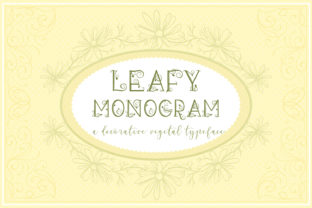
Leafy Monogram is a hand-drawn, uppercase-only decorative font designed with intentional botanical storytelling. Unlike digitally generated script fonts or generic serif alternatives, every character—from A to Z—is individually illustrated. Each letter integrates organic motifs: winding vines, delicate fern fronds, blooming blossoms, and curling tendrils. These aren’t mere ornaments tacked on; they’re structurally woven into the letterforms themselves. The result is a cohesive, balanced alphabet where typography and illustration harmonize seamlessly.
Its “vintage swirls” reference early 20th-century design sensibilities—think Art Nouveau flourishes and Victorian botanical engravings—but rendered with modern clarity and digital precision. That balance is key: it feels nostalgic without slipping into kitsch, and decorative without sacrificing legibility at appropriate sizes.
Why Hand-Drawn Details Matter
In an age of algorithmic fonts and AI-generated assets, the human touch behind Leafy Monogram carries real weight. Each glyph was sketched by hand before digitization—a process that preserves irregularity, rhythm, and subtle asymmetry. These imperfections aren’t flaws; they’re signals of authenticity and care. For viewers, that translates into emotional resonance: a sense of warmth, intention, and craftsmanship.
This matters especially in contexts where trust and connection are central—like wellness branding, eco-conscious packaging, or educational resources about biodiversity. When a font feels *made*, not *generated*, it subtly reinforces values like sustainability, mindfulness, and respect for natural systems.
Common Misconceptions About Decorative Fonts
- “Decorative fonts can’t be professional.” Not true—when used intentionally (e.g., headlines, logos, or short quotes), fonts like Leafy Monogram add distinction and voice. They’re widely used by boutique publishers, conservation nonprofits, and premium skincare brands.
- “If it’s hand-drawn, it must be hard to read.” Leafy Monogram prioritizes legibility within its stylistic boundaries. Its tall x-height, open counters, and consistent stroke contrast ensure clarity—even at 24–36pt sizes in print or high-res digital displays.
- “It only works for ‘old-fashioned’ projects.” Far from it. Designers pair Leafy Monogram with clean sans-serifs (like Inter or Lato) for striking contrast—making it ideal for modern editorial layouts, podcast cover art, or Instagram carousel graphics about climate science.
Where Leafy Monogram Fits in Today’s Creative Landscape
Across industries, visual identity is increasingly tied to values. Consumers—and students, educators, and collaborators alike—respond to design that communicates purpose. Leafy Monogram meets that need in several practical ways:
Educational Tools & Environmental Literacy
Teachers developing classroom posters about native plants, pollinators, or forest ecosystems often choose Leafy Monogram for titles and labels. Its botanical integration doesn’t distract—it reinforces the subject. A poster titled “The Life Cycle of a Monarch Butterfly” gains thematic cohesion when set in Leafy Monogram, subtly echoing wing patterns and milkweed vines.
Sustainable Business Branding
From zero-waste cafés to regenerative farms, brands focused on ecological stewardship use Leafy Monogram to signal alignment with natural rhythms. It appears on seed packet labels, farmers’ market signage, and reusable tote bags—not as decoration alone, but as a visual extension of their mission. Crucially, it avoids clichéd “green” tropes (like overused leaf icons or earthy gradients), offering sophistication instead of stereotype.
Creative Projects with Emotional Depth
Wedding designers, journal makers, and indie authors rely on Leafy Monogram for projects where tone is paramount. A poetry chapbook themed around seasonal change gains lyrical continuity when chapter titles bloom with vine-like serifs. Similarly, memorial cards honoring a life connected to gardening or conservation feel deeply personal when set in this font.
How to Use Leafy Monogram Effectively
Like any expressive tool, Leafy Monogram shines brightest when applied with intention. Here’s how experienced designers maximize its impact:
- Reserve it for display text. Use it for headlines, logos, pull quotes, or short phrases—not body copy. Its detail rewards attention, not scanning.
- Pair it wisely. Contrast is your friend. Set Leafy Monogram headlines against neutral, highly readable sans-serifs (e.g., Inter or Roboto) to ground the composition.
- Respect spacing. Its generous letter-spacing (tracking) is built-in for optimal flow. Avoid tightening it excessively—let the swirls breathe.
- Consider color thoughtfully. While classic black-on-white highlights its intricacy, muted greens, terracotta, or deep indigo echo its natural roots without overwhelming.
- Test across mediums. It performs beautifully in print (especially letterpress or foil stamping) and high-resolution web graphics—but avoid tiny screen sizes (<16px) where fine details blur.
Beyond Aesthetics: The Deeper Significance
Typography is never neutral. Every font choice conveys subtext: authority, playfulness, tradition, innovation—or, in Leafy Monogram’s case, interconnection. Its fusion of letter and leaf quietly reminds us that language itself grew from observation of the natural world: early alphabets borrowed shapes from stars, rivers, and trees. Using Leafy Monogram isn’t just about visual appeal—it’s a small, daily act of recentering design within ecological awareness.
That’s why educators use it in lessons about etymology and environmental history. Why urban planners include it in community garden wayfinding. Why climate scientists select it for conference banners—because communication about planetary health deserves both clarity and reverence.
Getting Started With Leafy Monogram
Leafy Monogram is available through reputable font retailers and independent foundries—always opt for licensed versions to support the original designer and ensure technical reliability (OpenType features, cross-platform compatibility, and regular updates). Most licenses include web-friendly formats (WOFF2), desktop use, and commercial permissions—ideal whether you're a solo creator or part of a larger team.
Before downloading, preview it in context: paste your project headline into a test layout. Try it alongside your existing brand colors and supporting fonts. Does it elevate the message—or compete with it? Trust your intuition, but also consult real-world feedback. Ask a colleague or focus group: “What feeling does this evoke? What kind of organization or person would use this?” Their answers often reveal more than technical specs ever could.
A Final Thought: Design as Stewardship
In choosing Leafy Monogram, you’re not just selecting a typeface—you’re choosing a perspective. One that sees beauty in complexity, value in slowness, and meaning in the marriage of form and function. As digital tools accelerate and generative design reshapes creative workflows, fonts like Leafy Monogram serve as gentle anchors: reminders that the most enduring designs grow from patience, observation, and deep respect—for both people and planet.
Whether you’re sketching your first logo or finalizing a decade-long conservation campaign, let Leafy Monogram be more than a stylistic flourish. Let it be a quiet affirmation: that creativity, at its best, is rooted.