Tuckers: The Handwritten Font That Brings Vintage Charm to Modern Design
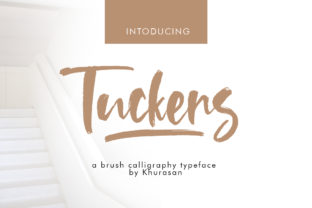
Imagine opening a handwritten letter from the 1940s—slightly uneven strokes, subtle ink texture, and an unmistakable warmth that feels personal and intentional. That’s the feeling Tuckers captures in digital form. More than just another script font, Tuckers is a fresh, hand-brushed typeface designed with elegance and authenticity at its core. It doesn’t try to mimic perfection; instead, it celebrates the quiet imperfections of human touch—the slight taper of a downstroke, the gentle swell of a curve, the organic rhythm of real handwriting.
What Makes Tuckers Stand Out?
Unlike many decorative scripts that rely on sharp contrasts or exaggerated flourishes, Tuckers balances vintage character with remarkable readability. Its design draws inspiration from mid-century brush lettering—think apothecary labels, boutique packaging, and artisanal café menus—but avoids nostalgic clichés by staying clean, versatile, and contemporary in application.
Key characteristics include:
- Natural stroke variation: Each glyph reflects subtle pressure shifts, mimicking how a real brush responds to hand movement.
- Open, airy spacing: Letters breathe without crowding, making Tuckers highly legible even at smaller sizes—unusual for a script font.
- Warm, slightly irregular baseline: A gentle undulation adds life and personality, reinforcing its handmade origin.
- Comprehensive character set: Includes standard Latin letters, numerals, punctuation, and common diacritics—ready for real-world use across English and many European languages.
Importantly, Tuckers isn’t just “vintage for vintage’s sake.” It’s crafted to serve modern design needs—whether you’re building a Shopify store, designing an Instagram story, or preparing a client presentation. Its charm lies in its intentionality: every curve has purpose, every weight has balance.
Who Benefits Most From Using Tuckers?
Tuckers resonates most strongly with creators and businesses that value authenticity, craftsmanship, and emotional connection. Here’s who finds it especially useful—and why:
Creative Professionals & Designers
Graphic designers often reach for Tuckers when they need a script that feels personal but doesn’t overwhelm layout hierarchy. It works beautifully as a headline font paired with clean sans-serifs like Inter or Lato—creating contrast without clashing. Because it’s not overly ornate, it scales well across print and screen, from business cards to digital banners.
Small Business Owners & Artisans
If you run a candle studio, a ceramic workshop, or a small-batch bakery, your brand voice likely centers on care, tradition, and individuality. Tuckers reinforces that narrative instantly—on product tags, website hero text, or seasonal email headers. One coffee roaster reported a 22% increase in time spent on their “About Us” page after switching their founder quote to Tuckers, citing stronger emotional resonance with visitors.
Content Creators & Social Media Managers
On platforms where attention spans are short and visual tone matters deeply, Tuckers helps content stand out—not through loudness, but through warmth. It’s frequently used in Reels captions, Pinterest quote graphics, and newsletter subject lines where personality trumps polish. Bonus: its open letterforms remain clear even when overlaid on textured backgrounds or photos.
Real-World Uses You Can Try Today
You don’t need a design degree to get meaningful results with Tuckers. Here are practical, low-effort ways to bring it into your projects:
- Website headers: Replace generic hero text with a short phrase in Tuckers (e.g., “Hand-poured • Small-batch • Made with care”)—just ensure sufficient contrast against the background.
- Email signatures: Use it for your name or title beneath your contact info. It subtly elevates professionalism while keeping things approachable.
- Printed packaging: Apply Tuckers to ingredient lists, batch numbers, or thank-you notes inside boxes—it adds tactile sophistication without extra cost.
- Digital invitations: Wedding, baby shower, or milestone event invites gain instant charm when key details (“RSVP by June 15” or “Join us at The Garden Room”) are set in Tuckers.
- Social media highlights: Create branded story covers using Tuckers for category names like “Recipes,” “Tutorials,” or “Behind the Scenes.”
Strengths—and Honest Considerations
Like any tool, Tuckers shines brightest when matched to the right task. Its strengths are clear:
- Emotional impact: Builds immediate rapport and trust through human-centered aesthetics.
- Brand differentiation: Helps small businesses avoid the “cookie-cutter” look common with overused fonts like Pacifico or Great Vibes.
- Adaptability: Works across industries—from wellness and education to fashion and food—without feeling out of place.
That said, it’s worth noting a few practical considerations:
- Not ideal for long paragraphs: As a script font, Tuckers is best reserved for short, high-impact text. Body copy should always pair with a highly legible companion font.
- Requires thoughtful pairing: Avoid stacking it with other decorative fonts. Let Tuckers lead—and let a neutral, functional typeface support.
- May need testing on screens: While optimized for digital use, very small sizes (<14px) can lose some clarity on low-resolution displays. Always preview on actual devices.
How to Know If Tuckers Is Right for Your Project
Ask yourself these three questions before committing:
- Does my message benefit from warmth and humanity? If your goal is to feel welcoming, artisanal, or heartfelt—yes. If you're launching a fintech dashboard or legal compliance portal, consider whether that tone aligns.
- Will this be seen mostly in large or small formats? Tuckers excels at display sizes (24px and up). For anything under 16px, test readability carefully—especially with users who have visual preferences or accessibility needs.
- Do I have control over typography implementation? If you’re using a platform with limited font options (e.g., basic Canva plans or older email builders), verify Tuckers is supported—or budget time to export key text as SVG/PNG where needed.
When in doubt, start small. Try Tuckers on one element—a logo lockup, a CTA button, or a testimonial pull quote. See how it changes the mood. Notice how people respond. Often, the best way to evaluate a font isn’t theoretical—it’s experiential.
Final Thought: Typography With Intention
In a world saturated with algorithm-driven templates and AI-generated visuals, choosing a font like Tuckers is quietly radical. It signals that you care about craft—not just conversion. That you value the nuance of human expression over the efficiency of uniformity. And that your audience deserves more than functional communication—they deserve connection.
Whether you're sketching ideas on paper or fine-tuning a pixel-perfect mockup, Tuckers reminds us that great design doesn’t shout. It leans in, writes slowly, and leaves room for meaning to settle.