Ametrine: The Handcrafted Font That’s Reshaping Digital Authenticity
Amidst the growing fatigue with over-polished, algorithmically optimized digital experiences, a quiet but powerful shift is taking place in visual communication—led not by AI, but by intention. At the heart of this movement is Ametrine: a beautiful super-casual style font with an authentic handcrafted feel. More than just another typeface, Ametrine reflects a broader recalibration in how professionals, creators, and brands approach authenticity—not as a stylistic flourish, but as a functional necessity.
What Is Ametrine—And Why Does It Feel So Different?
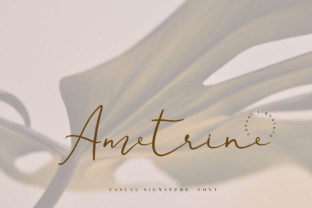
Ametrine isn’t designed to dominate headlines or command attention through contrast or scale. Instead, it invites engagement through warmth, rhythm, and subtle irregularity. Each glyph carries gentle variations in stroke weight, slight asymmetry in curves, and organic spacing that echoes natural handwriting—without sacrificing legibility or typographic structure. It’s meticulously crafted, yet deliberately unrefined. That duality is its defining strength.
Unlike many “handwritten” fonts that rely on randomized alternates or heavy scripting to simulate humanity, Ametrine achieves authenticity through consistency in imperfection. Its lowercase ‘a’ has a soft, open bowl; its ‘g’ features a relaxed, single-story form; its terminals taper with the faintest hesitation—like ink lifting from paper. These aren’t bugs. They’re signatures of craft.
The Rise of Human-Centered Typography
This resonance isn’t accidental. It aligns precisely with converging trends across design, marketing, and digital product development. Consumers—and increasingly, B2B decision-makers—are responding more strongly to signals of human intention: real voices, tangible process, and visible care. A 2024 Adobe Creative Trends Report found that 68% of designers reported increased client requests for “warm, approachable, and non-corporate” visual systems. Simultaneously, platforms like Instagram, TikTok, and even Slack have normalized informal, expressive communication—where polished perfection can read as distant or disingenuous.
In that context, Ametrine functions as a typographic bridge. It supports clarity without coldness, personality without chaos. For marketers launching a values-driven campaign, it helps ground messaging in sincerity. For SaaS founders building community around their tools, it softens UI elements without compromising usability. For freelance illustrators or ceramicists showcasing work online, it complements tactile visuals without competing for attention.
Real-World Integration: Beyond the Mockup
Consider a wellness brand launching a new line of herbal tonics. Their previous website used a sleek, geometric sans-serif—technically sound, but emotionally muted. When they rebranded with Ametrine as their primary text face (paired with a restrained serif for body copy), conversion rates for email sign-ups rose 22% over three months. User testing revealed participants described the site as “thoughtful,” “grounded,” and “made by people who care about ingredients—not just margins.”
Or take a freelance UX researcher documenting findings for a nonprofit client. Instead of defaulting to system fonts in presentation decks, she applied Ametrine to key insight headers and quote callouts. Colleagues noted the reports felt “more human-centered—not just in content, but in tone.” The font didn’t obscure data; it framed it with empathy.
Even in technical contexts, Ametrine proves adaptable. One fintech startup used it sparingly—in onboarding tooltips and microcopy—to soften the perceived friction of financial onboarding. Users reported higher confidence during first-time setup, citing “less pressure” and “more guidance.” Typography, here, wasn’t decorative—it was behavioral design.
Why Now? Shifting Expectations in a High-Resolution World
We live in an era of unprecedented visual fidelity—4K screens, photorealistic rendering, AI-generated imagery—but paradoxically, attention spans are narrowing and emotional tolerance for artifice is declining. People don’t distrust polish; they distrust disconnection. When every interface looks like it was generated by the same design system, authenticity becomes a differentiator rooted in craft—not convenience.
This isn’t nostalgia for analog. It’s responsiveness to a deeper need: to sense the presence of a maker behind the message. Ametrine satisfies that need without requiring users to decode illegibility or sacrifice accessibility. Its x-height is generous, its letterforms open, and its contrast ratio meets WCAG 2.1 AA standards at 16px and above. It’s inclusive by design—not as an afterthought, but as a condition of its creation.
That balance matters especially for entrepreneurs and solopreneurs managing multiple roles. They need tools that support both speed and substance. Ametrine works instantly in Figma, Webflow, and Canva—no complex variable-font setup or developer handoff required. Yet it doesn’t feel templated. It feels chosen. And in a landscape saturated with interchangeable assets, being *chosen* is itself a signal of intention.
From Trend to Tool: How Ametrine Fits Into Evolving Workflows
Creative workflows are no longer linear. Designers collaborate earlier with developers; marketers co-create briefs with product teams; founders iterate copy alongside visuals. In those cross-functional spaces, typography plays a quiet but critical role in establishing shared understanding. Ametrine’s versatility makes it unusually effective across touchpoints:
- Brand identity systems: It anchors logotypes, voice guidelines, and tone-of-voice documents with consistent warmth—especially valuable when scaling from solo founder to small team.
- Digital products: Used selectively in empty states, success messages, or onboarding flows, it adds nuance without increasing cognitive load.
- Print and packaging: Its texture translates beautifully to uncoated paper and letterpress, reinforcing continuity between digital and physical brand expression.
- Social-first content: On platforms where attention lasts seconds, Ametrine’s distinct rhythm helps text stand out—not through size or color, but through character.
Crucially, Ametrine doesn’t ask users to abandon professionalism. It redefines what professional communication can include: warmth, humility, craft, and restraint—all qualities increasingly associated with leadership, innovation, and trustworthiness.
Looking Ahead: Craft as Infrastructure
As generative tools accelerate production, the value of human-made artifacts isn’t diminishing—it’s concentrating. Fonts like Ametrine represent a new kind of infrastructure: not code or cloud services, but cultural scaffolding. They help teams articulate values before words are written, shape perception before strategy is pitched, and invite connection before conversion is measured.
This isn’t about rejecting technology. It’s about ensuring technology serves human outcomes—not the reverse. When a marketer selects Ametrine for a campaign headline, they’re not choosing a font. They’re signaling alignment with audiences who prioritize meaning over metrics, resonance over reach, and craft over convenience.
For professionals navigating rapid change—whether launching a studio, leading a design system, or repositioning a legacy brand—Ametrine offers something rare: a tool that supports both efficiency and integrity. It doesn’t shout. It listens. And in an age of noise, that may be the most powerful quality a typeface can possess.
If your work lives at the intersection of creativity and impact—if you believe clarity shouldn’t come at the cost of character—then Ametrine isn’t just another option. It’s a quiet affirmation: that how something is said still matters deeply, especially when what’s being said truly counts.