Maxleon: Elegant Handwritten Font for Real Projects
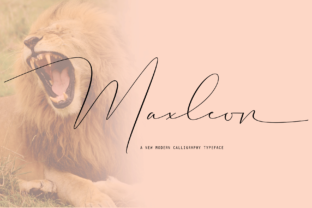
There’s a quiet power in handwriting—the slight variation in stroke weight, the organic rhythm of connected letters, the subtle imperfections that signal human presence. Maxleon captures that authenticity without sacrificing clarity or versatility. It’s not a script that tries too hard to look “artistic.” Instead, it’s an elegant handwritten font designed with natural movement, balanced spacing, and gentle contrast—making it feel personal, intentional, and effortlessly refined.
What Makes Maxleon Stand Out
Unlike many decorative scripts that prioritize flair over function, Maxleon was built for real-world use. Its lowercase letters flow smoothly, with open counters and generous x-heights that improve legibility—even at smaller sizes. Uppercase characters carry presence without dominance, and the ligatures (like “fi,” “fl,” and “ct”) activate naturally in supported applications, adding polish without manual intervention.
It’s also carefully kerned. That means letters sit together with thoughtful spacing—not cramped, not loose—so your headlines, quotes, or short phrases read cleanly the first time. No guesswork. No tedious tweaking. Just reliable, expressive typography you can trust across formats.
Ideas You Can Use Today
You don’t need a design degree to make Maxleon work for you. Here are practical, tested ways people are using it right now:
- Invitations & Announcements: Pair Maxleon with a clean sans-serif (like Inter or Lato) for wedding invites, baby announcements, or milestone celebrations. Use it for names, dates, and key phrases—keeping body text in the supporting font for readability.
- Social Media Graphics: On Instagram or Pinterest, Maxleon adds warmth to quote cards, product launch teasers, or behind-the-scenes captions. Try it over muted backgrounds or soft gradients—not busy patterns—to keep focus on the message.
- Business Cards & Letterheads: Small business owners and freelancers use Maxleon for their name or tagline. It signals approachability and craftsmanship without undermining professionalism. Keep contact details in a neutral typeface to maintain scannability.
- Blog Headers & Email Signatures: A single line of Maxleon at the top of a newsletter or blog post creates instant visual identity. It’s memorable but not distracting—especially when used sparingly and consistently.
- Educational Materials: Teachers and course creators apply Maxleon to section titles in workbooks or slide decks. It softens formal content while reinforcing a supportive, human-centered tone.
Adapting Maxleon Across Contexts
Different goals demand different treatments—and Maxleon responds well to thoughtful adaptation.
For digital platforms: Use OpenType features like stylistic alternates or swashes selectively. A single flourished capital at the start of a headline can elevate tone—but avoid overusing them in UI elements or navigation where speed and clarity matter most.
For print projects: Test print samples early. Maxleon’s fine strokes reproduce best on coated paper or high-resolution digital presses. If you’re printing on textured stock or using inkjet printers, consider slightly increasing stroke weight via software (e.g., using the “Stroke” effect in Illustrator with caution) or choosing the bolder weight if available.
For branding consistency: Define clear usage rules. For example: “Maxleon is used only for primary headlines and signatures. All body copy, buttons, and data labels use Roboto.” This keeps your visual language cohesive—even when multiple people contribute to your materials.
Real Examples, Not Just Theory
A freelance photographer uses Maxleon for client welcome notes—hand-typed in Mailchimp, then exported as PDFs with embedded fonts. The result feels personal, not templated. Clients mention it unprompted: “It made me feel like you really saw me.”
A small-batch candle maker prints Maxleon directly onto soy-based labels using a thermal printer. They limit its use to the scent name (“Honey & Sage”) and skip decorative flourishes—prioritizing durability and legibility over ornamentation. Customers recognize the brand instantly, even without logos.
An educator building a self-paced online course applies Maxleon to module titles inside Notion. Because Notion supports custom fonts via browser extensions (like Font Picker), students see consistent styling across devices—no extra plugins needed on their end.
Keeping It Effective—Not Just Pretty
Elegance shouldn’t come at the cost of clarity. Here’s how to stay grounded:
- Limit scope. Use Maxleon for one purpose per layout—never for full paragraphs, dense instructions, or legal disclaimers.
- Test contrast. Ensure text meets WCAG AA standards (4.5:1 minimum against background). Light gray on white? Probably too faint. Charcoal on cream? Often just right.
- Respect hierarchy. If Maxleon is your accent font, let your primary font do the heavy lifting. Don’t compete for attention—collaborate.
- Stay platform-aware. Maxleon works natively in desktop apps (Adobe Creative Cloud, Affinity, Sketch) and modern browsers. For email clients or older CMS platforms, embed fallbacks or serve web-optimized versions via @font-face.
Who Benefits Most—and How
If you’re launching a side project, Maxleon helps you stand out without sounding salesy. It gives handmade goods, wellness services, or creative workshops an immediate sense of care and intention.
If you’re managing brand assets for a team, Maxleon simplifies decisions. Instead of debating between five similar scripts, you have one reliable option that scales across print, web, and social—with clear guardrails for when and how to use it.
If you’re learning design basics, Maxleon is forgiving. It doesn’t require advanced typographic knowledge to yield strong results—just attention to spacing, size, and context.
And if you’re simply looking for something that feels more like *you*—not another generic template—Maxleon offers expressive range without demanding perfection. Your voice stays central. The font supports it—not overshadows it.
One Last Thought
Typography isn’t about finding the “perfect” font. It’s about choosing tools that align with your message, respect your audience’s time, and hold up across real conditions—lighting, screens, paper quality, reading distance. Maxleon succeeds because it balances character with utility. It invites connection, but never insists on it. Use it where warmth matters. Where personality counts. Where simplicity speaks louder than decoration.